

Option Board RS-485: A Powerful Connectivity Solution for Control and Automation Systems
RS-485 (Recommended Standard 485) is a widely used communication standard in industrial and automation applications, particularly for connecting electronic devices and sensors over long distances. To utilize the RS-485 protocol, an Option Board RS-485 is often employed. This expansion board enables system connectivity with RS-485, ensuring efficient and reliable data transmission between devices.
✅ Understanding Option Board RS-485
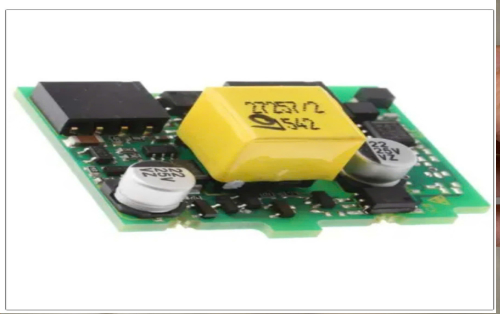
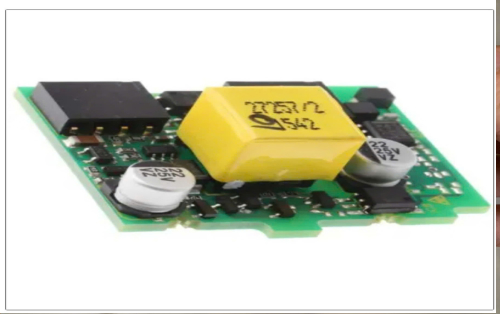
The Option Board RS-485 is an additional hardware module that can be installed into controllers, PLCs (Programmable Logic Controllers), measuring instruments, and monitoring devices to enable communication via the RS-485 standard. This expansion board converts signals from other protocols (such as RS-232) to RS-485 while also managing electrical signals on the transmission line, allowing multiple devices to be connected.
✅ Advantages of RS-485
RS-485 offers several outstanding benefits, making it widely adopted in industrial systems:
✅ Long-Distance Data Transmission: RS-485 can transmit signals over distances of up to 1,200 meters, making it ideal for distributed control systems in large environments.
✅ Excellent Noise Immunity: With differential signal transmission, RS-485 provides strong resistance to electrical interference, making it suitable for industrial environments with high electromagnetic disturbances.
✅ Multi-Device Connectivity: RS-485 supports up to 32 devices on a single communication bus, facilitating complex network systems without requiring multiple signal converters.
✅ Cost Efficiency: Since RS-485 requires only a single pair of wires for signal transmission, it reduces material and installation costs.
✅ Structure and Functioning of Option Board RS-485
A typical Option Board RS-485 consists of the following components:
✅ Signal Conversion: Converts signals from other communication standards like RS-232, USB, or Ethernet to RS-485 for device connectivity.
✅ Connection Terminals: Equipped with terminals for connecting RS-485 cables to controllers or PLCs.
✅ Isolation Feature: Some RS-485 boards include electrical isolation to protect devices from power surges, lightning strikes, and electrical noise.
✅ LED Indicators: Display system status, allowing operators to easily identify connection errors or operational issues.
✅ Applications of Option Board RS-485
The Option Board RS-485 is widely used in various industries:
✅ Industrial Automation Systems: Connects PLCs, controllers, and sensors via RS-485 for monitoring and controlling production processes.
✅ Lighting Control Systems: Used in smart lighting systems for remote control and interconnecting multiple lighting units.
✅ Energy Monitoring: Collects data from electricity meters, temperature sensors, humidity sensors, and other monitoring devices for analysis and reporting.
✅ Building Management Systems (BMS): Integrates HVAC systems, lighting, and security into a unified network using RS-485.
✅ Conclusion
The Option Board RS-485 is an excellent solution for expanding and connecting systems in industrial and automation environments. With advantages such as long-distance data transmission, high noise resistance, and multi-device connectivity, it has become a popular choice for applications requiring high reliability and cost efficiency.
Hotline: 07879.00099